
Manage every device.
Control it from anywhere.
The cloud service that manages your fleet of obnizOS devices.
Access many devices at once and control them bi-directionally from anywhere. It handles device authentication and exposes MCP / APIs / SDKs — and includes a beginner-friendly online dev environment.
// Connect to and control two devices
const front = new Obniz("8719-6211", {
  access_token: "token_5OyixjxkG7rSFjzSYKNx7"
});
const motor = new Obniz("8519-6010", {
  access_token: "token_5OyixjxkG7rSFjzSYKNx7"
});

let temperature = 0;

front.onloop = async () => {
  temperature = await front.ad0.getWait() / 25.0f;
};

motor.onloop = async () => {
  motor.io0.output(temperature > 10);
};
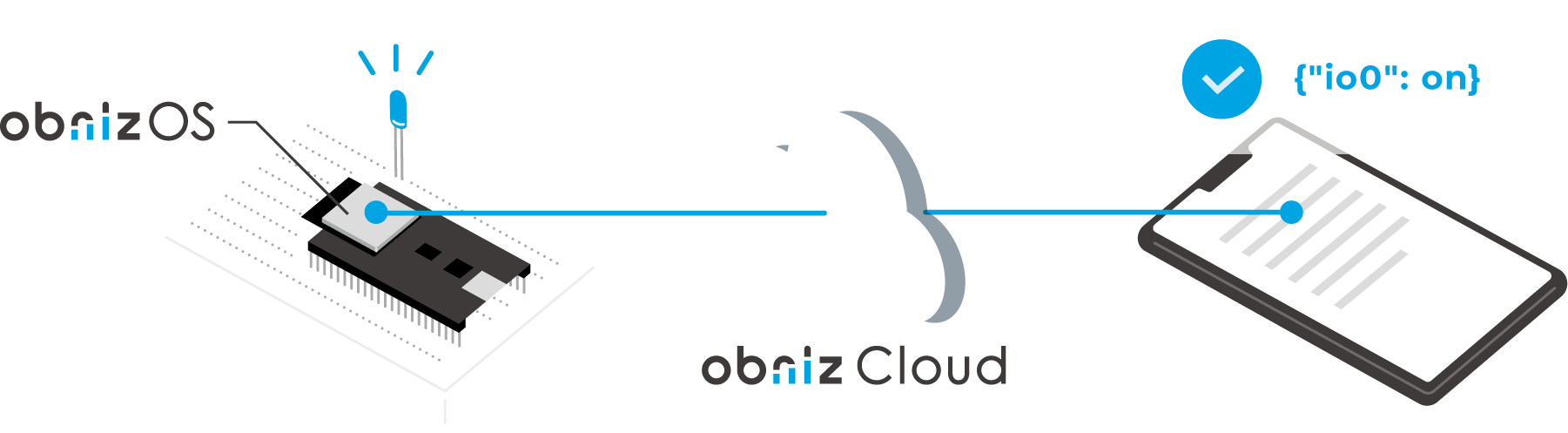
Your code runs on the server, and your devices are controlled through the cloud.
- In production
- 40,000 + devices
- In service
- 2018 onward
- SDK
- JavaScript +
- Parts library
- 100 +
Where it sits
Where this fits in obniz
obniz is made of three products — obnizOS devices, obniz Cloud, and obniz Now — and our solutions combine them for each customer.
This page: obniz Cloud
The service that manages your fleet of obnizOS devices. Access many devices at once, control them bi-directionally from anywhere, and reach them through MCP / APIs. Handles device authentication and includes a beginner-friendly online dev environment.
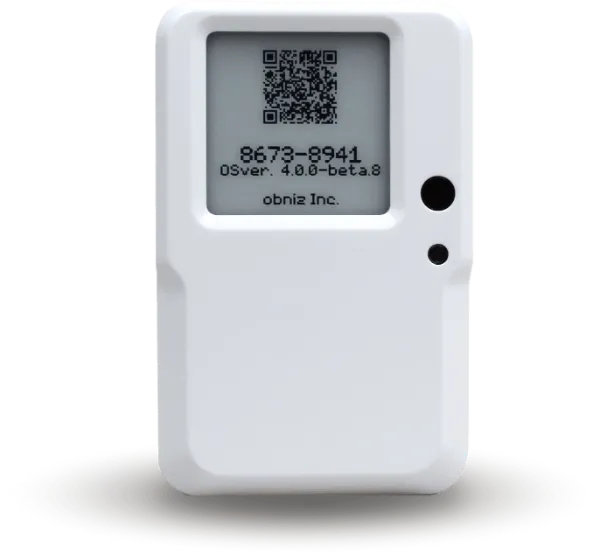
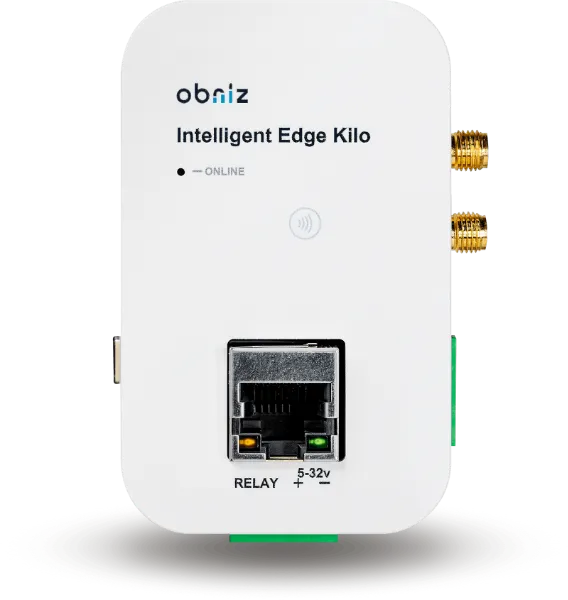
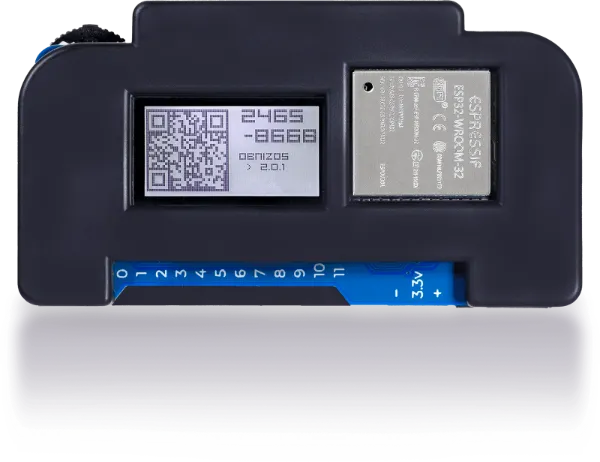 obnizOS
Devices
obnizOS Devices
Cloud-connected devices running a dedicated OS
Cloud
obniz Cloud
The service that manages your fleet of devices
Application
obniz Now
Build applications on top of obniz Cloud
Why obniz Cloud
Spend 99% less time
wrestling with hardware.
Firmware, MQTT brokers, device authentication, OTA updates — obniz Cloud takes care of the 90% of IoT work nobody wants to do.
Fleet Management
Manage your devices as one fleet
Register obnizOS devices regardless of count or location, and see status, versions, logs, and traffic in one view. Device authentication and OS update delivery are handled on the cloud side.
Bidirectional Control
Many devices at once, from anywhere
Connect to multiple devices from a single piece of code and exchange data and commands in real time, both ways. From the office or from an AI agent, the same path reaches the field.
MCP / API / SDK
Reach it from MCP, APIs, and SDKs
REST / GraphQL / WebSocket APIs and a JavaScript SDK, plus an MCP server so Claude and other AI agents can operate devices directly. The beginner-friendly online dev environment lets you start in the browser today.
Platform Overview
One device,
one API.
Operate any obnizOS-equipped hardware through the same authentication and the same API — regardless of model, location, or network.
Platform Features
From PoC to production,
on the same stack.
The development you start with one device scales as-is to tens of thousands.
Device management
- Device authentication and access-token management
- Install and update obnizOS remotely
- Transfer device ownership (easy to manage after sale)
- Visibility into traffic, connectivity, and errors
Developer experience
- Online dev environment — build and run in the browser
- JavaScript SDK (Node.js and browser)
- Works with GitHub Pages, Vercel, and custom domains
- Parts library covering 100+ popular sensors
Security
- TLS 1.2 with elliptic-curve crypto (browser-grade)
- Permissions per API key and token
- Microcontroller-based — immune to kernel-level malware
- End-to-end encrypted communication
Scale
- Same API from a 1-device PoC to tens of thousands in production
- Choose your region — Japan and overseas
- Usage-based pricing — no over-provisioning
- SLAs and enterprise support available
Integrations
Any language,
the way you already write it.
JavaScript is the first-class SDK. With REST, GraphQL, and WebSocket, you can also reach obniz from Python, Go, Rust, Swift, and any other language.
Webhooks for external services and MCP for AI integration are supported, so obniz drops into your existing workflow.
JavaScript
Node.js / Browser / TypeScript
GraphQL
API
WebSocket
Real-time bi-directional
REST
HTTPS endpoints
Webhook
Event notifications
MCP
AI integration
Compatible Hardware
Every obnizOS device,
works out of the box.
FAQ
Frequently asked questions
Q. How is obniz Cloud different from obniz Now?
Q. Can I try it for free?
Q. Which languages can I use?
Q. Does it work offline?
Q. Can I embed it into my own product?
Q. What about security certifications?
Get a device. Start in the cloud, free.
Sign up in a minute. Pick up a device and start coding.